
“All I can do is be me, whoever that is.”
– Bob Dylan
 Revolutionary, rebel, lover, recluse, romantic, spiritualist, mystery. How can you identify a man who has no identity? In his new film about (presumably about Bob Dylan) entitled I’m Not There, Todd Haynes does no such thing, instead taking seven different aspects of Dylan’s life and portraying them in such a fresh and exciting way that’s it’s hard not to be compelled by this man’s life.
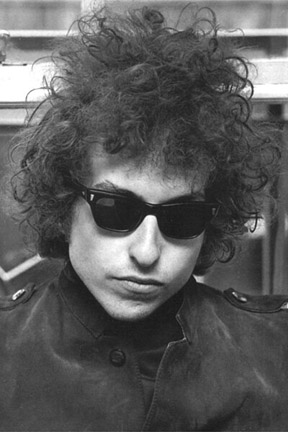
Bob Dylan’s name is not mentioned once in the movie. Instead, each version of Dylan is given a name that has some sort of clever reference to Dylan’s influences and events in his life. In fact, the whole movie is full of clever Dylan references that had me chuckling many times throughout the film.
But this isn’t just a film for Dylan lover’s like me, but for appreciators of well-made, quality art. Music is important in a film like this, and all of the songs included in the film fit perfectly with the mood of the scenes they are featured in. Songs like “Blind Willie McTell,” “Man in the Long Black Coat” or “Idiot Wind” add emotion and atmosphere to the some of the films greatest moments.
Also, going into the film I was expecting some awkward transitions between the different storylines, but was pleased to find that the editors had done a fantastic job weaving the stories of these six different characters into a beautiful piece of art.
But of course there are the six (or seven) characterizations of Dylan themselves that deserve most of the attention:
Romantic (1959-61) – Portrayed by Marcus Carl Franklin
An 11-year old, black Woody Guthrie hops on to a train with his guitar and finds two hobos in the same car with him. We find out that like Dylan, Woody is traveling across the country to meet the real Woody Guthrie in the hospital. Woody then proceeds to tell the hobos his life story. This section of the film is the most humorous, if you understand that like Dylan, everything that Woody is telling the hobos about his life is completely false.
Revolutionary (1962-64) – Portrayed by Christian Bale
Young Jack Rollins is a rising folk star during a time of war and protest in America. This section of the film is told documentary style, featuring interviews with those who knew Rollins, including a Joan Baez character played by Julianne Moore. Christian Bale earns the “Most Convincing Portrayal of Dylan Award”, capturing his mannerism’s and accent perfectly. Rollins will return later in the film, a completely changed man.
Mystery (1965) – Portrayed by Ben Whishaw
This part of the movie doesn’t have a plot, instead serving as a sort of narration for the film. Whishaw plays a convincing version of Dylan (named Arthur Rimbaud, after the poet obviously) at his awkward and sometimes hilarious press conferences. All of the dialogue in these segments is real Dylan quotes. They serve mainly as transition pieces. At different points throughout the film we’ll see a clip of Arthur saying something that usually always adds quite beautifully to what’s happening in the scenes surrounding it.
Rebel (1966) – Portrayed by Cate Blanchett
Jude Quinn has betrayed his followers. At the New England Folk Festival he reveals his new sound. Loud, harsh music with howling electric guitars, much more different than his quiet folk roots. What follows is a chaotic look at Jude’s first tour in England after going electric. Cate Blanchett earns the “Second Most Convincing Portrayal of Dylan Award,” bringing out Dylan’s exaggerated speech and movements perfectly. It’s a perfect bit of casting, symbolizing how Dylan changed himself so much until not even his fans knew what he was anymore.
Lover (1964-73) – Portrayed by Heath Ledger
Robbie Clark is not a singer, Robbie Clark is an actor. An actor who made it big portraying Jack Rollins in the film “Grain of Sand.” On the set of the movie he meets Claire (played by Charlotte Gainsbourg), whom he quickly falls in love, marries, and starts a family with. But as Robbie’s fame grows, the relationship slowly comes apart and what results is the most heartbreaking thread of the movie. Ledger is impressive, but Gainsbourg just about steals the whole movie. What most people won’t realize when watching this part of the movie is that it’s telling the story of Dylan’s first marriage. So while it doesn’t seem to have anything to do with Dylan, it really does.
Spiritualist (1979-81) – Portrayed by Christian Bale
Jack Rollins enters back into the picture a new man who has discovered God. He is now known as Pastor John in the Grace Community Church. This aspect of Dylan’s life only takes up one scene in the movie, but it’s probably the most powerful.
Recluse (1967-????) – Portrayed by Richard Gere
Ever since his motorcycle accident in ’66, Dylan has been a sort of hermit, reveling in the American folk tradition and Old West. This part of the film is allegorical of that aspect of Dylan’s life. Richard Gere plays Billy the Kid, a man living in a cabin outside of the town of Riddle. But when Pat Garrett introduces a new highway plan to go through the city, Billy rises up and protests. This segment really is more subtle and brilliant than the others if you can fully understand the allegory.
So in the end, who is Bob Dylan? He is everyone and no one, he is an Artist, and his music and art will live on long after he is gone. We can all be thankful for that.
Amazingly, I have yet to see the film. But I’m going tomorrow. Very cool how you broke Bob down into eras. As if Bob could ever be put in a box…
So while I check out “I’m Not There,” why don’t you check out my new novel, BLOOD ON THE TRACKS.
It’s a murder-mystery. But not just any rock superstar is knocking on heaven’s door. The murdered rock legend is none other than Bob Dorian, an enigmatic, obtuse, inscrutable, well, you get the picture…
Suspects? Tons of them. The only problem is they’re all characters in Bob’s songs.
You can get a copy on Amazon.com or go “behind the tracks” at http://www.bloodonthetracksnovel.com to learn more about the book.